Introduction
Links are the backbone of the internet. Every campaign, email, social post, ad, and QR code relies on a URL to connect users to content. But as digital ecosystems grow more complex, the conversation around smart links vs regular links is becoming increasingly important.
So what’s the real difference?
And which type of link should modern businesses rely on?
Let’s break it down clearly and strategically.
What Are Regular Links?
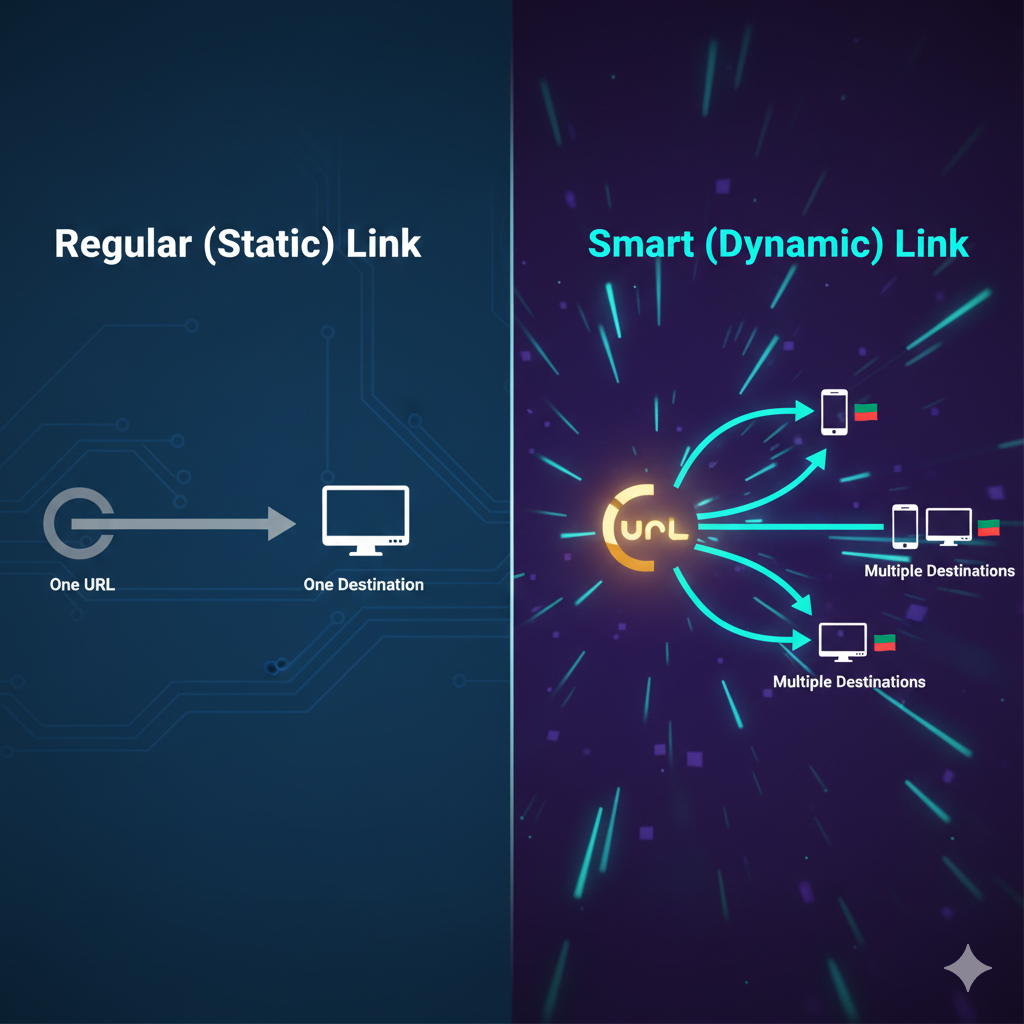
A regular URL is a static web address that points to one fixed destination.
For example:
https://example.com/product-page
No matter who clicks it — mobile or desktop, local or international — everyone lands on the exact same page.
Regular links are ideal for:
-Internal website navigation
-Blog references
-Permanent documentation
-Static landing pages
They are simple, predictable, and foundational for SEO structure.
However, they lack flexibility.
What Are Smart Links?
Smart links are intelligent, dynamic URLs that adapt in real time based on the context of the click.
Instead of sending everyone to the same page, a smart link can:
-Detect device type
-Redirect based on location
-Adjust by traffic source
-Track advanced analytics
-Update destination without changing the URL
This dynamic behavior is what separates smart links from traditional ones.
If you want to see how this works in practice, Openito’s Smart Links feature explains how one link can route users to multiple destinations automatically.
Static vs Dynamic URLs
The fundamental difference in the debate of smart links vs regular links comes down to static versus dynamic behavior.
Regular Links = Static URLs
Static URLs:
-Always lead to the same destination
-Cannot adapt to user conditions
-Require manual updating if the destination changes
If you run a campaign and need to update the landing page, you must change the link everywhere it was published.
That can be inefficient, and risky.
Smart Links = Dynamic URLs
Dynamic URLs evaluate rules at click time.
For example:
- Mobile users → mobile page
- Desktop users → full website
- International users → localized version
All of this happens instantly, without requiring separate links.
This is especially useful for multi-channel marketing and growth campaigns.
Tracking Links: Data Visibility Is the Game Changer
One of the biggest practical differences between smart links and regular links lies in tracking capabilities.
Regular Links and Basic Analytics
With traditional URLs, you typically rely on:
-Google Analytics pageviews
-UTM parameters
-Referral reports
While useful, this data can be fragmented and hard to centralize.
Smart Links as Advanced Tracking Links
Smart links act as built-in tracking links.
They provide deeper insight into:
-Device distribution
-Geographic breakdown
-Campaign performance
-Click timestamps
-Source attribution
This centralized visibility makes campaign optimization much easier.
Openito’s Link Analytics feature, for example, allows marketers to track performance at the link level — not just the page level.
That difference is powerful.
Link Optimization: Where Smart Links Win
Regular URLs simply connect one point to another.
Smart links enable link optimization.
Optimization can include:
-Routing traffic more intelligently
-A/B testing different destinations
-Updating campaigns without breaking links
-Reducing bounce rates
-Improving conversion flow
Instead of treating links as static connectors, smart links turn them into performance tools.
This is why marketing teams are shifting toward dynamic link management systems.
If your team manages multiple campaigns across channels, Openito’s Link Management for Marketing Teams page outlines how centralized control simplifies operations.
Real-World Comparison
Let’s look at real scenarios.
Scenario 1: Paid Ads
Regular Link:
-Sends all traffic to one landing page
-Requires manual updates if the campaign changes
Smart Link:
-Routes traffic by device or region
-Can be updated instantly from a dashboard
-Tracks performance per campaign
Scenario 2: Multi-Device Audience
Regular Link:
-Mobile and desktop users see the same experience
-May cause friction or higher bounce rates
Smart Link:
-Automatically adapts to device
-Reduces friction
-Improves engagement
Scenario 3: Ongoing Campaigns
Regular Link:
- If a page changes, links must be replaced everywhere
Smart Link:
- Destination updated centrallySame URL continues working
When to Use Regular Links
Use regular URLs for:
- Internal linkingNavigation menusStatic content pagesCore SEO structure
They remain critical for website foundation.
When to Use Smart Links
Use smart links for:
- Paid campaignsSocial media distributionInfluencer promotionsQR codesMulti-channel campaignsDevice-specific routingPerformance tracking
If your campaign involves complexity, segmentation, or analytics, smart links provide measurable advantages.
The Strategic Difference
The difference between smart links vs regular links is not about replacing one with the other.
It’s about using the right tool for the right purpose.
Regular links provide structure.
Smart links provide flexibility and optimization.
As marketing ecosystems grow more fragmented and data-driven, smart links are quickly becoming a competitive necessity.
Final Thoughts
Regular URLs built the internet.
Smart links are optimizing it.
If your business relies on multi-device audiences, campaign tracking, or link optimization, upgrading from static URLs to intelligent link systems can significantly improve performance.
In today’s digital environment, the smarter your links are, the stronger your strategy becomes.