The Problem With Traditional Links
Links are everywhere. They connect ads, emails, social posts, QR codes, websites, apps, and entire digital journeys. Yet most links still work the same way they did years ago: one static URL pointing to one fixed destination.
That approach no longer matches how people actually use the internet.
Today, users:
-Switch between mobile and desktop constantly
-Use different operating systems and browsers
-Come from ads, social media, messengers, QR codes, and emails
-Expect fast, relevant, and frictionless experiences
A single static link cannot adapt to all of these variables. This is where the smart link comes in.
What Is a Smart Link?
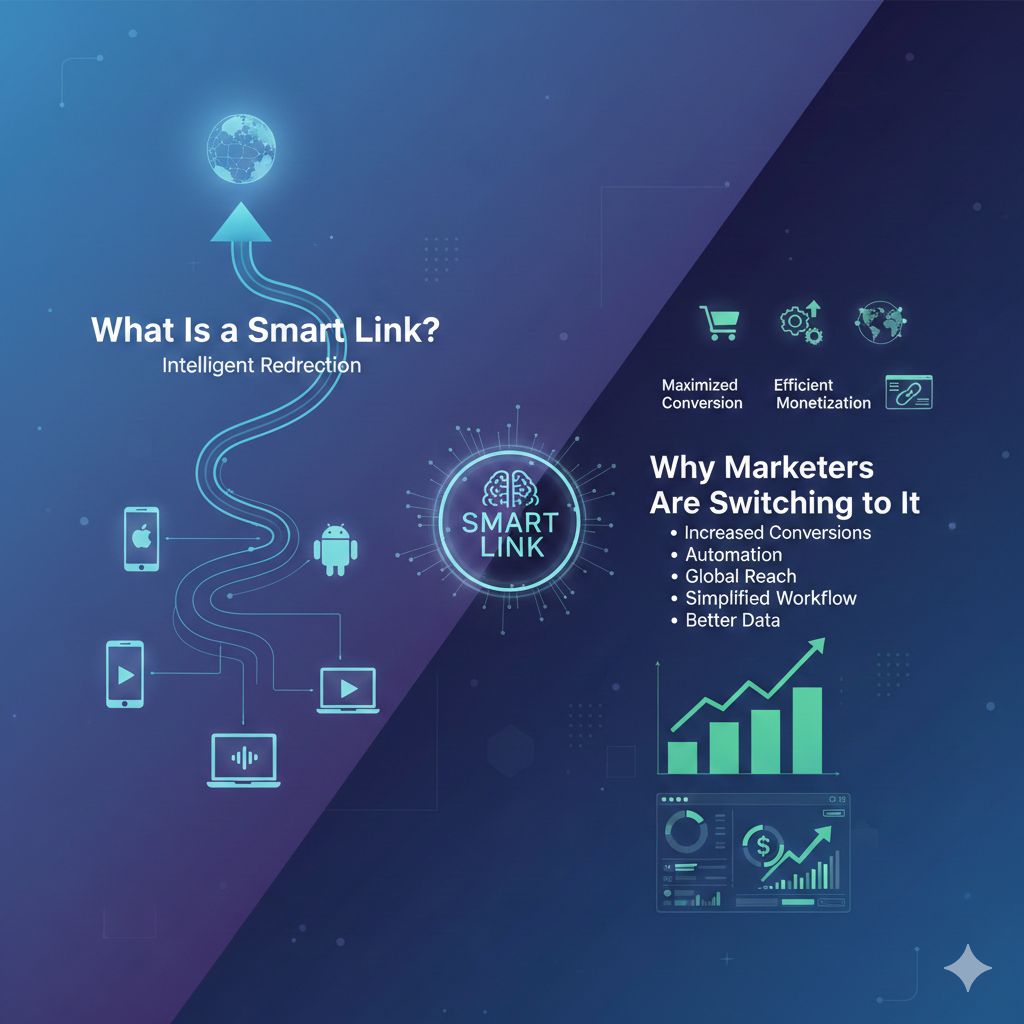
A smart link is an intelligent, dynamic URL that automatically adapts its behavior based on the context of the click.
Instead of sending every user to the same destination, a smart link can redirect users differently depending on factors such as:
-Device type (mobile, desktop, tablet)
-Operating system (iOS, Android, Windows, macOS)
-Location or language
-Campaign source
-Custom business rules
In simple terms, a smart link decides where a user should go at the exact moment they click.

Platforms like Openito are built specifically to manage this logic at scale, allowing teams to control, analyze, and optimize links from a single place.
Smart Links vs Traditional Links
The difference between traditional links and smart links is not just technical — it’s strategic.
Traditional links
-One destination for all users
-No flexibility after publishing
-Limited tracking data
-Changes require updating every placement
Smart links
-Multiple destinations from one URL
-Rules-based redirection
-Detailed analytics and segmentation
-Destinations can be updated anytime
This flexibility is the main reason smart links are rapidly replacing ordinary URLs in modern marketing stacks.
How Smart Links Actually Work
Behind the scenes, smart links use link management logic that evaluates conditions at click time.
When someone clicks a smart link, the system checks:
-What device is being used
-What operating system or browser is detected
-Where the user is coming from
-Any predefined rules set by the marketer
Based on that evaluation, the user is redirected instantly to the most relevant destination.
For example:
-Mobile users → mobile-optimized landing page
-iOS users → App Store
-Android users → Google Play
-Desktop users → product website
This entire process happens in milliseconds and feels seamless to the user.
Why Smart Links Matter for Marketing Performance
Smart links are not just about convenience, they directly impact performance metrics that marketers care about.
1. Higher conversion rates
Sending users to the right destination reduces friction. Fewer wrong landings mean:
-Lower bounce rates
-Higher engagement
-Better conversion rates
For example, routing mobile users away from desktop-only pages can dramatically improve campaign results.
2. Centralized link management
One of the biggest advantages of smart links is control after launch.
With a smart link:
-You can change destinations without touching ads or posts
-You can pause or redirect campaigns instantly
-You avoid broken links across channels
This is especially useful for long-running campaigns, printed materials, QR codes, and evergreen content.
Learn more about this approach on Openito’s Smart Links feature page.
3. Actionable analytics instead of vanity metrics
Traditional links tell you how many clicks you got. Smart links tell you what those clicks mean.
Using link analytics, marketers can understand:
-Which devices perform best
-Which locations convert more
-Which channels drive quality traffic
-How users behave after clicking
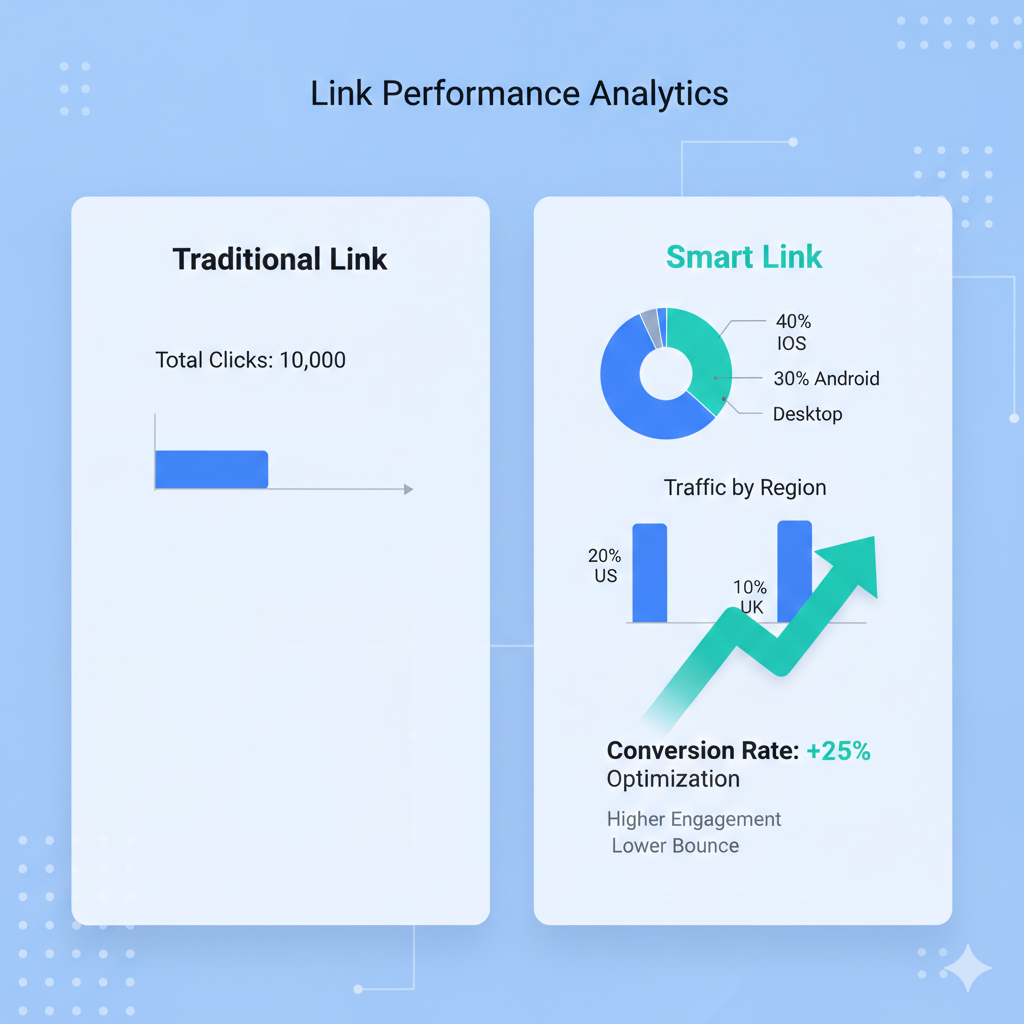
This transforms links from simple connectors into decision-making tools.
You can explore this capability in Openito’s Link Analytics feature.
Smart Links and Dynamic Links Explained
The terms smart links and dynamic links are often used together, and sometimes interchangeably, but there is an important distinction.
Dynamic links
Dynamic links focus on changing destinations without changing the URL. They allow marketers to update where a link points over time.
Smart links
Smart links include dynamic behavior but go further by adding:
-Device-based logic
-Conditional redirects
-Analytics and segmentation
-Brand control and governance
In short, dynamic links are a component, while smart links are the full system.
The Role of Branding and Trust in Smart Links
Users are more cautious than ever about clicking links. Long, messy URLs or generic short links can reduce trust.
Smart link platforms often support branded links, allowing businesses to:
-Use their own domain
-Maintain consistent brand identity
-Improve click-through rates
This branding layer turns links into recognizable, trustworthy touchpoints instead of anonymous redirects.
Smart Links Beyond Digital Marketing
While marketing teams were early adopters, smart links are now used across entire organizations.
Examples of real-world use
-Product teams using smart links for feature rollouts
-Sales teams routing leads to region-specific pages
-Customer support teams linking users to the right help content
-Operations teams managing internal workflows
Because smart links centralize logic, they reduce manual work and errors across departments.
Smart Links and QR Codes
Smart links are especially powerful when combined with dynamic QR codes.
A QR code powered by a smart link allows businesses to:
-Update destinations after printing
-Track scans just like clicks
-Reuse QR codes across campaigns
This is essential for offline-to-online experiences such as events, packaging, menus, posters, and retail displays.
Openito supports this through its Dynamic QR Codes feature.
Who Benefits Most From Smart Links?
Smart links scale with both team size and business complexity.
They are particularly valuable for:
-Marketing teams running multi-channel campaigns
-Startups experimenting with growth funnels
-SaaS companies managing app and web traffic
-Agencies handling multiple clients
-Enterprises needing governance and analytics
As traffic sources increase, smart links become less of a “nice-to-have” and more of an infrastructure requirement.
Why Marketers Are Switching to Smart Links Now
The shift to smart links is accelerating for one key reason: complexity.
Marketing is no longer linear. A single campaign may include:
-Paid ads
-Social media
-Email sequences
-Influencer links
-QR codes
-Multiple landing pages
Managing this with static links is inefficient and error-prone.
Smart links offer a future-proof solution: one link, unlimited logic, continuous optimization.
Final Thoughts
A smart link is more than a smarter URL; it’s a control layer for modern digital experiences.
As audiences, devices, and channels continue to fragment, the ability to adapt links in real time becomes a competitive advantage.
For marketers, growth teams, and digital businesses, smart links are no longer optional. They are quickly becoming the standard.
If you want to understand how this works in practice, explore Openito and see how smart links can simplify and strengthen your entire link strategy.